ice makers
Best Ice Makers For RVs And Campers
The best portable ice makers for RV travel and camping — compact, fast, energy-efficient, and built for life on the road. Includes AC-powered picks for shore power and 12V DC options for off-grid boondocking.
Published March 22, 2024
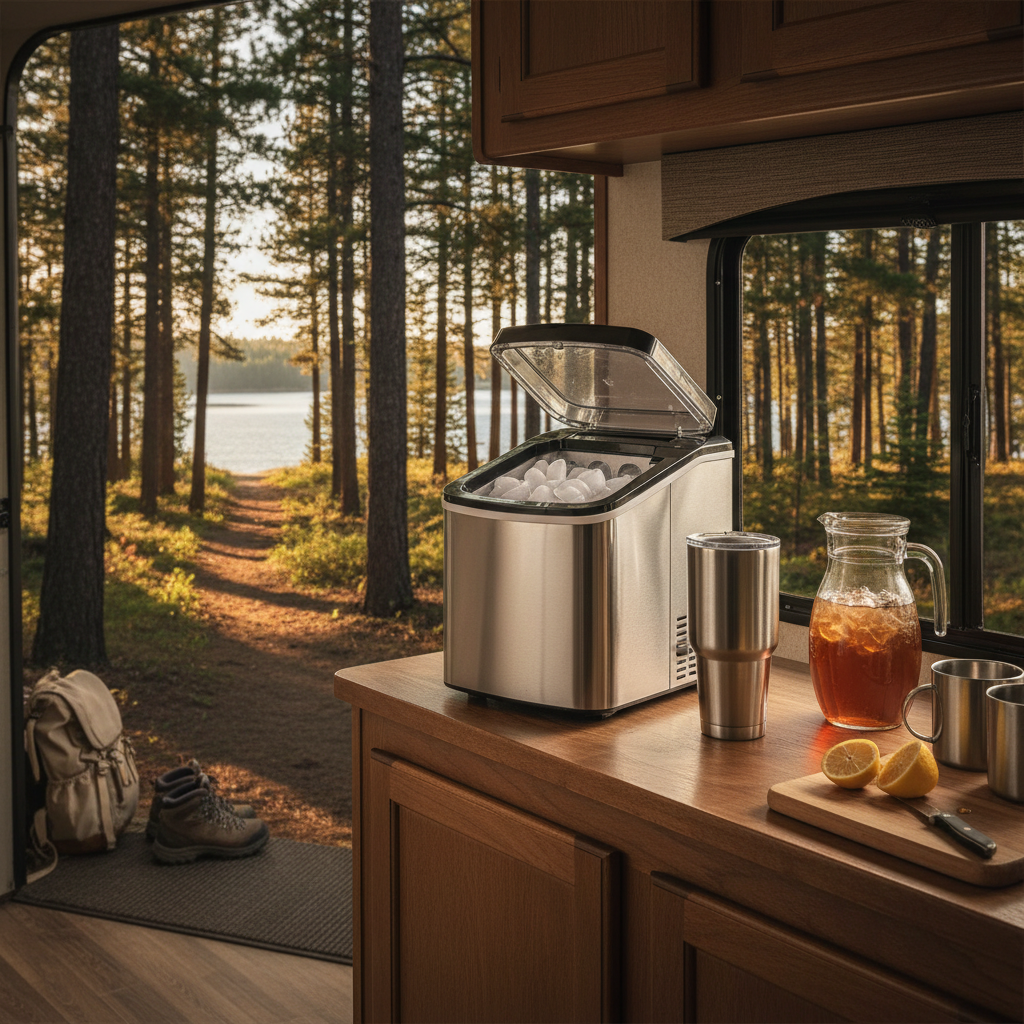
Table of Contents
Why Every RVer Needs a Portable Ice Maker
Anyone who's spent time in an RV knows the ice problem. RV refrigerators are smaller and less efficient than home models — and their built-in ice makers (if they have one at all) are slow, often broken, and the first thing to fail. The alternative — buying bags of ice from a camp store — adds up fast and requires planning every trip around ice resupply.
A portable countertop ice maker solves this completely. You fill the tank with fresh water, plug it into your shore power outlet or RV inverter, and have fresh ice in 6–8 minutes. No ice bags. No running out mid-trip. No watered-down drinks from melted bag ice.
For full-time RVers or frequent travelers, the math is simple: a quality portable ice maker pays for itself in eliminated ice bag purchases within 2–3 months.
Amazon Associate link — we may earn a commission
View EUHOMY Ice Maker on Amazon$89.99
Key Buying Considerations for RV Use
Dimensions and counter space: RV kitchens are small. Measure your available counter space before purchasing. Look for machines under 12 inches wide and 14 inches deep. Leave 4–6 inches of clearance on each side for ventilation.
Weight: You're moving this machine. Look for units under 16 lbs when empty. The EUHOMY weighs approximately 13 lbs, making it genuinely portable for one person.
Carry handle: Essential for RV use. You'll move the machine in and out of storage, carry it to an outdoor table, and potentially transport it on foot to a campsite. A solid, integrated handle is non-negotiable.
Power requirements: Most portable ice makers run on standard 110V AC. If you're on shore power or running a generator, any standard model works. For off-grid boondocking, look for a 12V DC model.
Vibration tolerance: The machine will experience vibration during travel. Store with the water tank empty and the machine secured. Most well-built machines handle RV travel vibration without issues if properly stored.
Top Pick for RVs: EUHOMY Countertop Ice Maker
The EUHOMY is our top recommendation for RV use, and for very good reasons:
Pros
- Built-in carry handle — genuinely portable
- Compact: 11.8 × 8.7 × 12.3 inches
- Lightweight: ~13 lbs empty
- Fast: 9 ice cubes in 6 minutes
- 26 lbs/day capacity — more than any RV party needs
- Self-cleaning mode — easy to maintain on the road
- Excellent value at $89.99
Cons
- Requires 110V AC power (not suitable for off-grid without inverter)
- Should be stored drained and secured during travel
- Not pressure-sealed — will leak if tipped during travel with water inside
Amazon Associate link — we may earn a commission
Get the EUHOMY for Your RV$89.99
RV Ice Maker Comparison Table
| Model | Power | Capacity | First Ice | Weight | Price | Best For |
|---|---|---|---|---|---|---|
| EUHOMY IM-01 | 110V AC | 26 lbs/day | 6 min | ~13 lbs | $89.99 | Shore power RVs |
| Frigidaire EFIC189 | 110V AC | 26 lbs/day | 7 min | ~12 lbs | ~$75 | Budget RV pick |
| BougeRV 12V Ice Maker | 12V DC | 20 lbs/day | 8 min | ~14 lbs | ~$139 | Off-grid boondocking |
| ICECO 12V Portable | 12V DC | 18 lbs/day | 12 min | ~11 lbs | ~$129 | Compact off-grid |
| GE Opal Nugget 2.0 | 110V AC | 24 lbs/day | 20 min | ~44 lbs | ~$399 | Not ideal for RVs |
Best ice makers for RV and camping use
12V DC Ice Makers: The Off-Grid Option
If you're a boondocker — camping off-grid without shore power or generator — a 12V DC ice maker runs directly off your RV battery bank or solar storage. This is a genuinely useful category for serious overlanders and dry campers.
The trade-offs compared to AC-powered machines: 12V models are typically slower (8–15 minutes per cycle), slightly less productive (15–20 lbs/day), and more expensive ($120–$180). But they work anywhere your vehicle battery works — campsite, trail, desert — without requiring a generator.
Brands like BougeRV, ICECO, and Alpicool make well-reviewed 12V portable ice makers. Look for models with a low-battery protection cutoff to prevent draining your RV battery to unusable levels.
Power Consumption: Will It Drain Your RV Battery?
| Usage Scenario | Est. Daily Consumption | Shore Power Impact | Battery/Solar Impact |
|---|---|---|---|
| Light use (2–3 batches/day) | 0.15–0.25 kWh | Negligible | Low draw on battery |
| Moderate use (10–15 batches) | 0.3–0.5 kWh | Very low | Manageable with 100Ah battery |
| Heavy use (30+ batches, party) | 0.8–1.2 kWh | Minor impact | May need generator support |
RV ice maker power consumption estimates
For shore power and generator use, the power draw of a portable ice maker (90–150W during operation) is completely manageable — equivalent to a laptop and a phone charger running simultaneously. For battery and solar setups, monitor your state of charge and prioritize ice making when solar is generating.
RV Ice Maker Tips and Setup
Always drain before moving. Empty the water tank completely before the RV moves. Even a secure machine can develop leaks from sloshing water during travel.
Store with lid open. Between uses and during storage, leave the lid slightly open to allow air circulation and prevent mildew growth in the reservoir.
Clean more frequently on the road. RV travel means more temperature variation, harder water from different locations, and more vibration — all of which can accelerate wear. Clean every 1–2 weeks minimum.
Use your RV's fresh water tank. Always fill the ice maker from your RV's fresh water supply — never from untreated outdoor sources.
Position away from the road side. If possible, position the machine on the curb side of the RV (away from traffic) to reduce vibration exposure during highway driving.
→ See all our ice maker picks: Best Countertop Ice MakersRecommended General Products
Looking for products we personally recommend? See our complete list of trusted tools and recommended products.
Browse Recommended Products →