ice makers
How Long Do Countertop Ice Makers Last?
Real-world lifespan data for portable countertop ice makers — what the average machine lasts, which factors affect longevity the most, signs your machine is nearing end of life, and exactly how to extend it as long as possible.
Published March 15, 2024
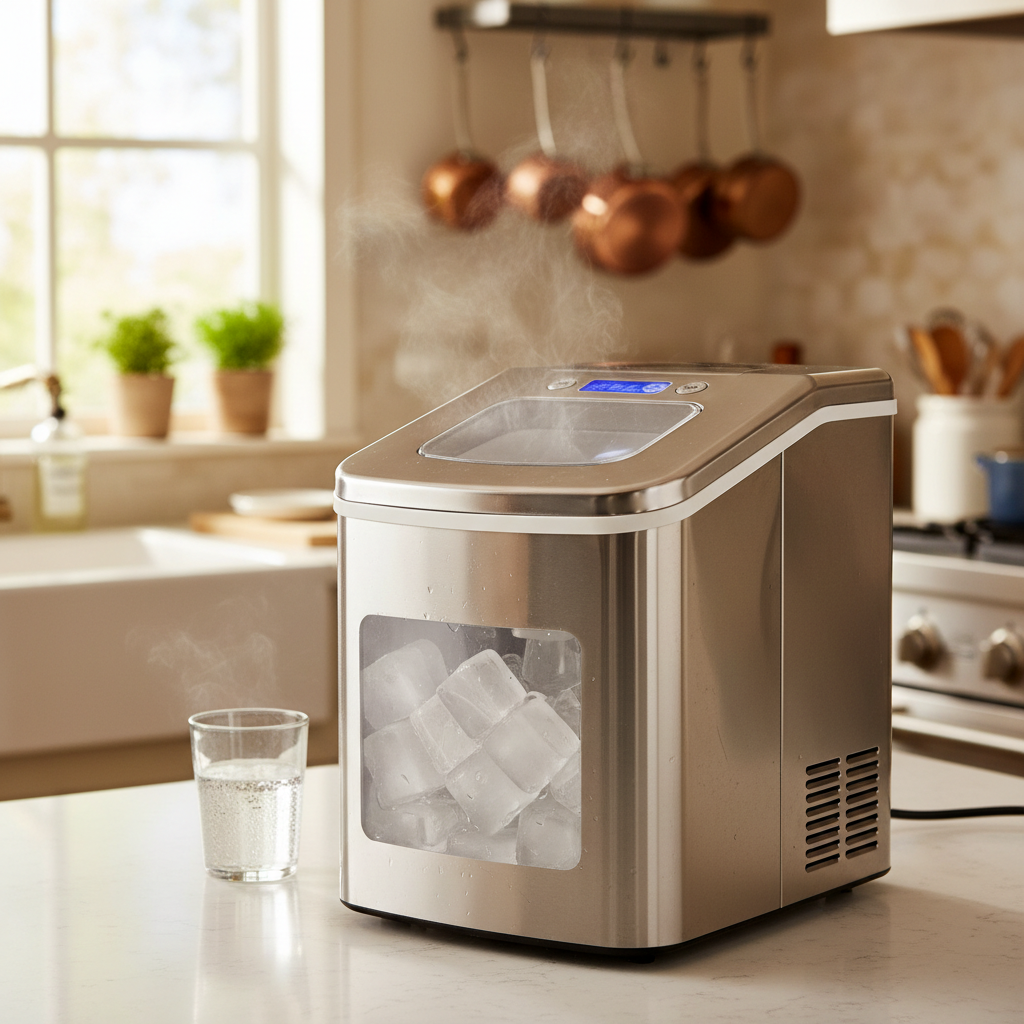
Table of Contents
How Long Do Countertop Ice Makers Actually Last?
The honest answer is: it depends heavily on the quality of the machine and how well it's maintained. That said, here are realistic expectations based on user data across thousands of reviews:
| Machine Tier | Average Lifespan | Best-Case With Good Care | Typical Failure Mode |
|---|---|---|---|
| Budget ($50–$80) | 1.5–2.5 years | 3 years | Compressor / control board |
| Mid-range ($80–$150) | 3–4 years | 5 years | Compressor / sensor wear |
| Premium ($300+) | 5–7 years | 8+ years | Electronic component wear |
| Commercial-grade ($500+) | 8–15 years | 20 years | Regular component maintenance |
Average countertop ice maker lifespan by price tier
The EUHOMY sits solidly in the mid-range tier. With regular cleaning and proper use, a realistic expectation is 3–5 years of reliable service — a strong return on an $89.99 investment.
Amazon Associate link — we may earn a commission
View EUHOMY Ice Maker on Amazon$89.99
The Five Factors That Most Affect Ice Maker Lifespan
1. Cleaning frequency: The single biggest factor. Machines cleaned every 1–2 weeks with a descaling cycle consistently outlast machines that are never cleaned. Mineral buildup forces the compressor to work harder, accelerating wear.
2. Water quality: Hard water is an accelerant for scale buildup. Soft or filtered water dramatically slows mineral accumulation. Households with very hard water (above 200 mg/L) should use filtered water and clean even more frequently.
3. Operating environment: Machines run in cool, well-ventilated spaces live longer. Hot garages, enclosed cabinets, and rooms above 90°F all stress the compressor. Adequate clearance around the machine is essential.
4. Usage intensity: Running the machine 24/7 accumulates compressor hours far faster than intermittent use. For the longest lifespan, run the machine when you need ice and leave it off otherwise.
5. Physical treatment: Dropping, moving the machine roughly while full of water, or storing it on its side can damage internal components. Handle it like the appliance it is.
How Water Quality Affects Longevity
Water hardness is measured in milligrams per liter (mg/L) or grains per gallon (GPG). Anything above 120 mg/L (7 GPH) is considered hard. The United States Geological Survey estimates that 85% of US homes have hard to very hard water.
| Water Hardness | mg/L | Effect on Ice Maker | Recommended Action |
|---|---|---|---|
| Soft | 0–60 | Minimal buildup | Standard cleaning schedule |
| Moderately hard | 61–120 | Normal buildup | Clean every 2 weeks |
| Hard | 121–180 | Accelerated buildup | Clean weekly, use filtered water |
| Very hard | 181+ | Rapid buildup | Always use filtered water |
Water hardness and its impact on ice maker maintenance needs
Switching to filtered or softened water is the single most impactful change you can make to extend ice maker life, especially in hard water areas. A simple pitcher filter (like Brita) costs $20–$30 and dramatically reduces calcium and magnesium deposits.
How a Maintenance Routine Extends Life
Think of an ice maker like a car. Regular oil changes (cleaning) prevent the catastrophic engine failures (compressor death) that end the machine's life prematurely. A machine that's never cleaned forces the compressor to work 20–40% harder to achieve the same cooling output as a clean machine — dramatically shortening its lifespan.
The math is compelling: a weekly 20-minute cleaning session extends a machine's useful life by an estimated 1–2 years. At $89.99 for the EUHOMY, that's exceptional value from a small maintenance time investment.
→ Read the full cleaning guide: How To Clean A Euhomy Ice Maker ProperlySigns Your Ice Maker Is Nearing End of Life
These symptoms suggest a machine approaching (or at) end of useful life:
| Sign | What It Means | Action |
|---|---|---|
| Compressor runs but machine stays warm | Compressor failing / refrigerant leak | Replace |
| Very loud rattling or grinding that didn't exist before | Compressor bearing wear | Replace soon |
| Machine frequently overheats / shuts down | Compressor at thermal limit | Replace |
| Persistent bad ice taste despite thorough cleaning | Internal contamination / degraded seals | Replace |
| Drastically reduced output (was 26 lbs, now 10) | Severe compressor degradation | Replace |
| Electronic controls erratic or unresponsive | Control board failure | Possibly repairable |
End-of-life signs for a countertop ice maker
A Practical Longevity Checklist
Pros
- Clean with citric acid every 1–2 weeks
- Use cold filtered or soft water
- Maintain 4–6 inches clearance on all sides
- Empty and dry before any storage
- Keep ambient temperature below 85°F
- Don't run 24/7 unnecessarily
- Handle and transport carefully
Cons
- Using warm or very hard tap water
- Blocking ventilation grilles
- Storing with water inside
- Ignoring early warning signs
- Never cleaning or descaling
- Running in a hot, unventilated garage
Amazon Associate link — we may earn a commission
Get the EUHOMY Ice Maker on Amazon$89.99
When to Replace vs. Repair
For most sub-$150 countertop ice makers, the replacement vs. repair decision is straightforward: if the repair cost (parts + labor) exceeds 50–60% of the machine's replacement cost, replace it. For the EUHOMY at $89.99, that means anything over ~$45 in repair cost tips the scales toward a new machine.
Sensor and electronic issues at under $20–$30 for parts are worth attempting if you're mechanically inclined. Compressor replacement is almost never economically justified for consumer-grade machines. When the compressor goes, it's time for a new unit.
Recommended General Products
Looking for products we personally recommend? See our complete list of trusted tools and recommended products.
Browse Recommended Products →